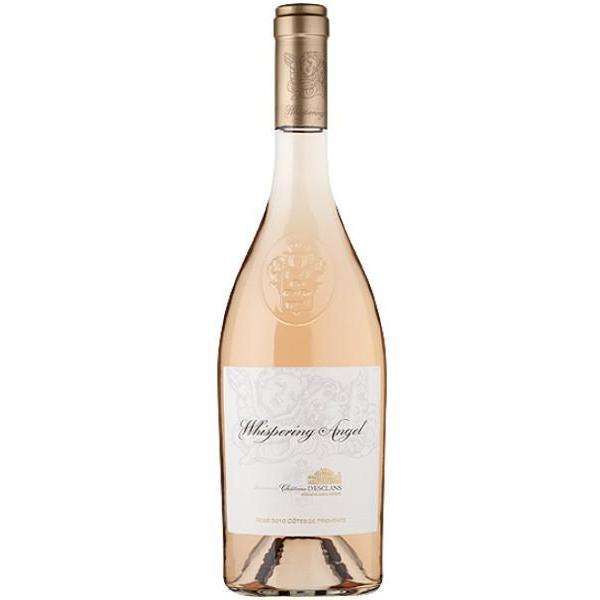
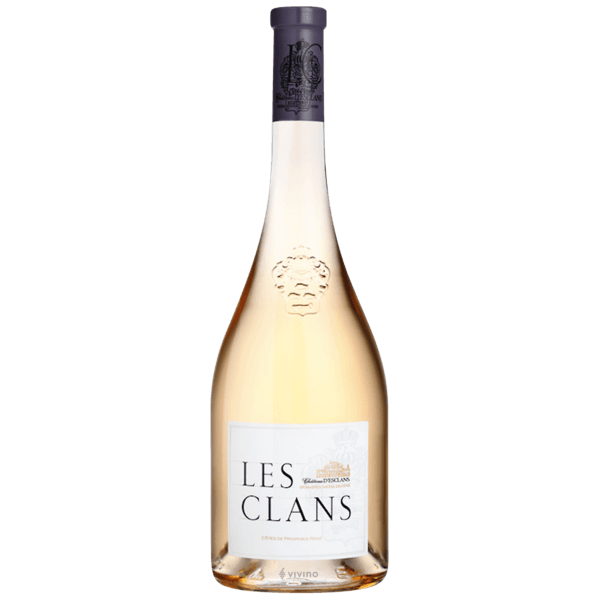
2019 Chateau D’Esclans Rose Les Clans 3.00L
2019 Chateau D’Esclans Rose Les Clans 3.00L Epitomizing rose that is greater than ever and more thoroughly enjoyable as a sophisticated, food driven wine. Chateau d’Esclans is located on an exceptional site, on elevated land near the Gorges de Pennafort, twenty five kilometers northwest of the ancient Roman city of Frejus on the Mediterranean coast.
Rosé
A rosé (from French, rosé [ʁoze]) is a type of wine that incorporates some of the color from the grape skins, but not enough to qualify it as a red wine. It may be the oldest known type of wine, as it is the most straightforward to make with the skin contact method. The pink color can range from a pale “”onion-skin”” orange to a vivid near-purple, depending on the grape varieties used and winemaking techniques. Usually, the wine is labelled rosé in French, Portuguese, and English-speaking countries, rosado in Spanish, or rosato in Italian.
There are three major ways to produce rosé wine: skin contact, saignée, and blending. Rosé wines can be made still, semi-sparkling or sparkling and with a wide range of sweetness levels from highly dry Provençal rosé to sweet White Zinfandels and blushes. Rosé wines are made from a wide variety of grapes and can be found all around the globe.
When rosé wine is the primary product, it is produced with the skin contact method. Black-skinned grapes are crushed and the skins are allowed to remain in contact with the juice for a short period, typically two to twenty hours. The grape is then pressed and the skins discarded, rather than left in contact throughout fermentation (as with red wine making). The longer the skins are left in contact with the juice, the more intense the color of the final wine.
When a winemaker desires to impart more tannin and color to red wine, some of the pink juice from the must can be removed at an early stage in what is known as the Saignée (from French bleeding) method. The red wine remaining in the vats is intensified as a result of the bleeding, because the volume of juice in the must is reduced, and the must involve in the maceration becomes more concentrated. The pink juice that is removed can be fermented separately to produce rosé.
The simple mixing of red wine into white wine to impart color is uncommon and is discouraged in most wine growing regions, especially in France, where it is forbidden by law, except for Champagne. Even in Champagne, several high-end producers do not use this method but rather the saignée method.
Related products
2021 Francois Villard Les Contours de Deponcins Viognier 2021 Francois Villard Les Contours de Deponcins Viognier Fine yellow; the nose is buttery, on roasted nuts, lime and white strawberry, table wax, has a steady depth. This is a bit New Wave on the palate, moves easily, depth, but continues with some fresh saltiness and assertion, [...]
2020 Francois Villard Condrieu De Poncins 2020 Francois Villard Condrieu De Poncins Full-bodied, with quite noticeable oak at this stage. Wonderful sense of freshness, however, and great precision. Long, lush and generous yet defined, this is a very classic Condrieu in all its resplendent flamboyance. Cooling almond and coconut on the finish. From 25-year-old Viognier [...]
Chateauneuf-du-Pape
2017 Domaine Berthet Rayne Chateauneuf-du-Pape Cuvee Cadiac 2017 Domaine Berthet Rayne Chateauneuf-du-Pape Cuvee Cadiac Fresh blackcurrant, licorice and flowers on the nose. Juicy, fresh and intensely flavored, with firm acids contributing to the impression of backbone. Quite aromatic in the mouth. Whereas northern Rhône wines are produced primarily from Syrah, Viognier, Marsanne, and Roussanne, southern Rhône believes in more diversity. Wines [...]
2020 Jean-Claude Bachelet Saint-Aubin 1er Cru Blanc 2020 Jean-Claude Bachelet Saint-Aubin 1er Cru Blanc Aromas of sweet orchard fruit, dried white flowers, beeswax and freshly baked bread preface the 2020 Saint-Aubin 1er Cru Charmois, a medium to full-bodied, satiny and precise wine with a bright core of fruit, lively acids and a long, saline finish. [...]